
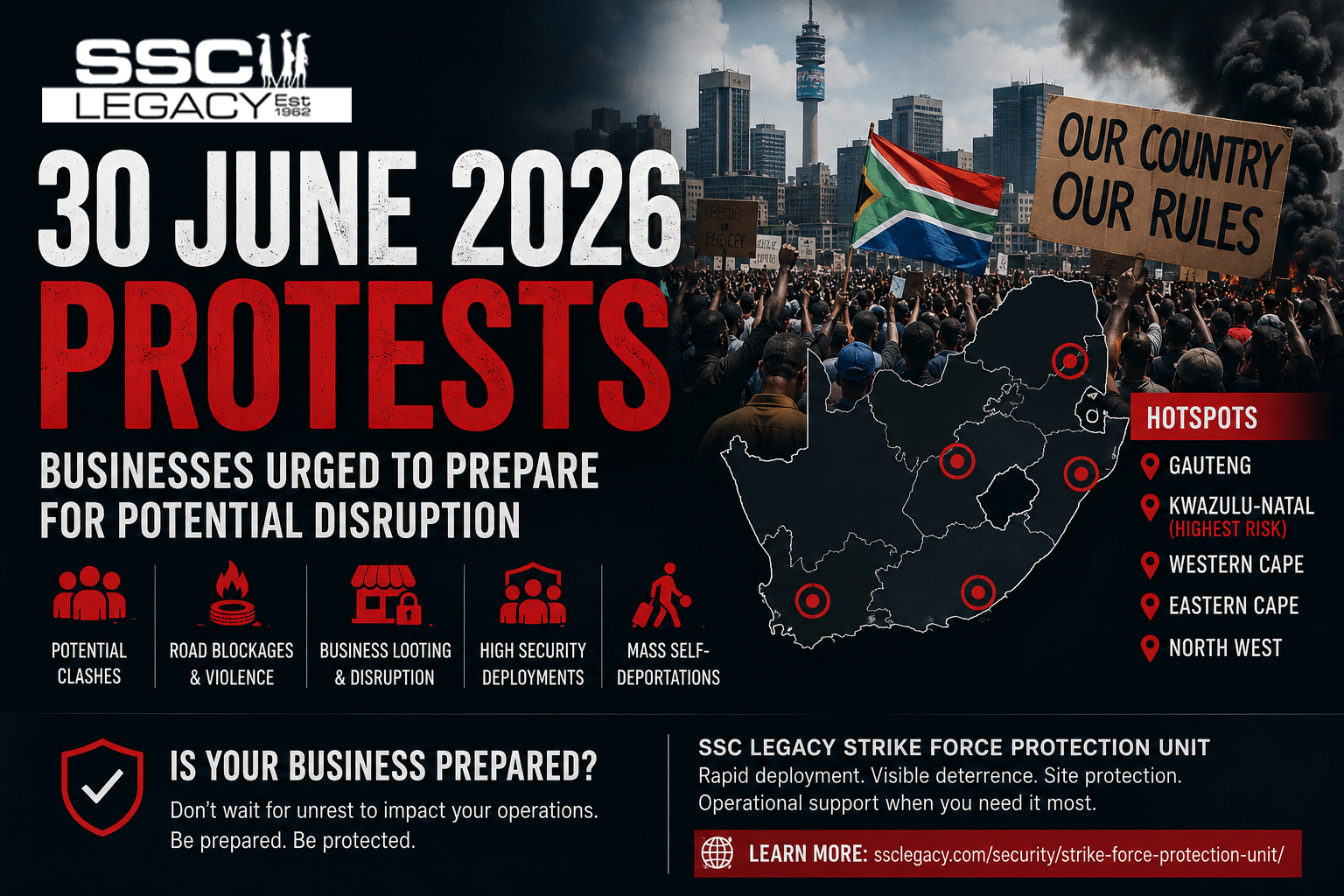
25 Jun 30 June Anti-Immigration Protests: Businesses Urged to Prepare for Potential Disruption
South African businesses are being urged to review their security, staff safety and business continuity plans ahead of the planned nationwide anti-immigration protests scheduled for 30 June 2026.
While organisers have indicated that the demonstrations are intended to be peaceful, law enforcement and security analysts are preparing for the possibility of disruption, intimidation, road blockages, looting and sporadic clashes in identified hotspot areas.
Protest Context
The organising groups have stated that the demonstrations are intended to focus on immigration enforcement and law enforcement rather than xenophobia. However, security agencies and risk analysts continue to prepare for a range of possible scenarios should localised tensions escalate.
Although organisers have indicated that 30 June is intended to be a day of protest rather than a national shutdown, businesses should anticipate that even peaceful demonstrations may result in localised disruption to transport, deliveries, customer access and normal trading activity.
SSC Legacy assesses the highest operational risk to businesses as occurring in KwaZulu-Natal and Gauteng. Organisations should review staff safety, transport routes, site security and continuity plans before 30 June 2026.
Urgent Advisory for Businesses
Companies operating in or near protest hotspots should not wait for unrest to begin before acting. Security, access control, staff movement, site protection and emergency response procedures should be reviewed before 30 June.
Areas of Highest Concern
KwaZulu-Natal: Highest RiskKey areas: Durban / eThekwini, Pietermaritzburg and Eshowe. Risk is elevated due to existing tensions, charged rhetoric and reports of large numbers of foreign nationals gathering while awaiting evacuation. |
GautengKey areas: Hillbrow, Tshwane, Benoni, Actonville and Wattville. Several precursor marches have already taken place, with township and urban business areas requiring close monitoring. |
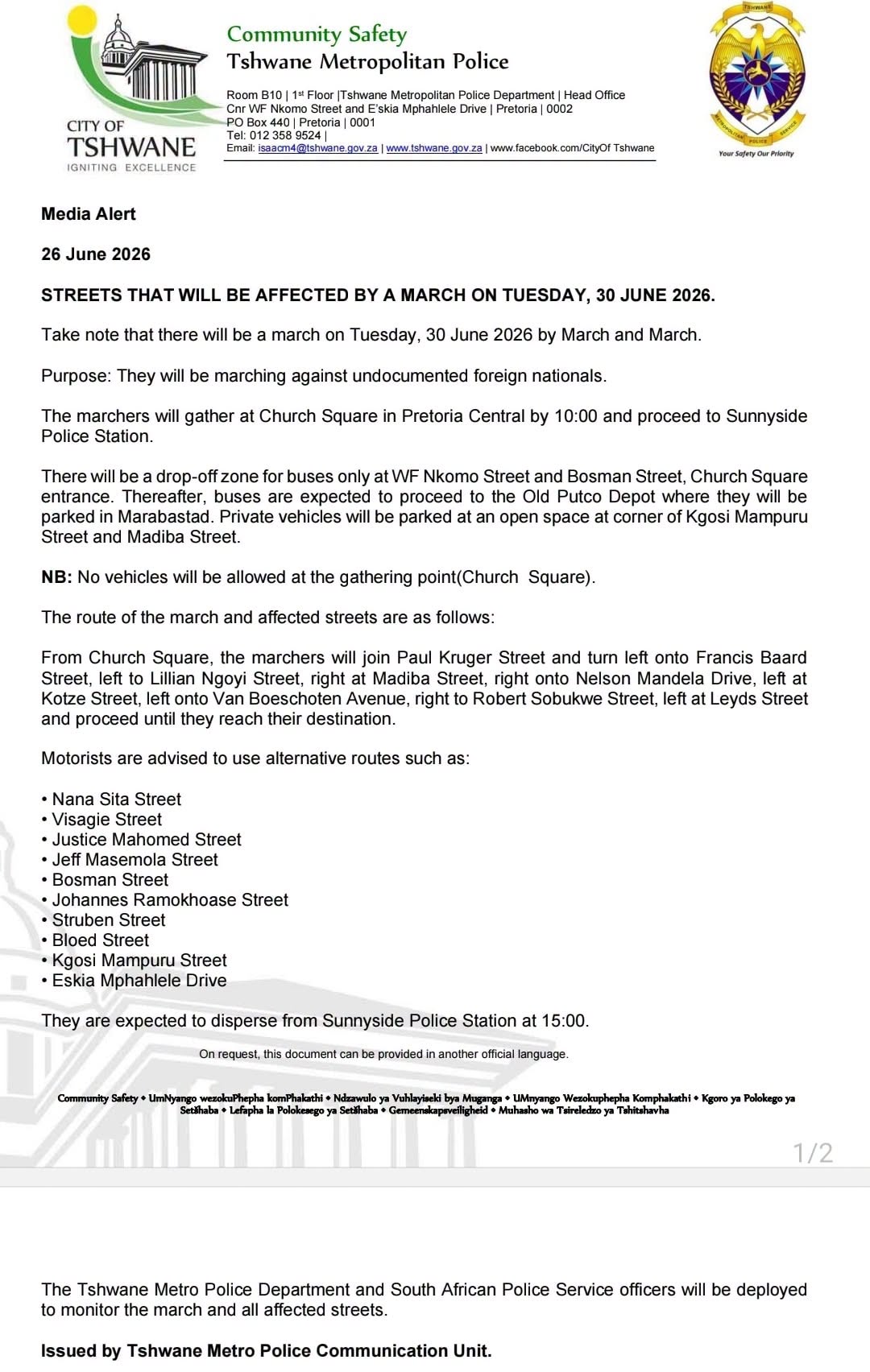 Tshwane |
Western CapeKey areas: Asla Park in Mossel Bay, Kleinmond and Gansbaai. Rural regions remain on alert following recent unrest and continued anti-migrant tensions. |
Eastern CapeKey areas: Thornhill outside Gqeberha and KuGompo City. Localised protest activity has already started expanding into vulnerable communities. |
North WestKey areas: Rustenburg, Brits, Marikana, Klerksdorp, Potchefstroom, and the N4 and R566 corridors linking the province to Gauteng. Mining towns, commercial centres and transport routes remain vulnerable to disruption, blockades and targeted action against informal businesses. |
What Authorities and Risk Analysts Are Preparing For
Security DeploymentsIncreased police visibility, cancelled leave and possible SANDF standby measures are expected in higher-risk areas. |
Sporadic ClashesCharged rhetoric may increase the risk of intimidation, vigilante activity and crowd-related violence. |
Business DisruptionLocalised road closures, shop closures, transport disruption and stay-aways may affect business operations. |
Higher-Risk Urban AreasBusinesses operating in densely populated commercial districts should exercise additional caution. Where large crowds, heightened emotions and existing community tensions intersect, isolated incidents can escalate quickly and affect surrounding businesses, even if they are not the intended focus of protest activity. |
What Businesses Should Do Now
- Review emergency response and evacuation procedures.
- Brief staff before 30 June.
- Monitor local alerts and verified intelligence updates.
- Identify alternative travel, delivery and access routes.
- Consider remote work arrangements where appropriate.
- Secure vulnerable premises, stock, vehicles and high-value assets.
- Review security staffing and response capability before protest activity begins.
Waiting until unrest starts may significantly reduce your response options.
Why This Matters for Companies
Even where protests remain peaceful, the knock-on effect can still be significant. Staff may be unable to reach work, deliveries may be delayed, customers may avoid affected areas and vulnerable sites may become exposed if unrest moves quickly.
For businesses with warehouses, retail outlets, offices, industrial sites, logistics routes or staff travelling through affected areas, the priority should be early planning and visible prevention.
Recommended Actions for 30 June
Businesses located within identified hotspots should consider implementing additional operational precautions for the day, including:
- Adjusting delivery schedules where practical.
- Reducing unnecessary staff travel through affected areas.
- Confirming communication channels with employees and contractors.
- Ensuring security providers and site managers remain on standby.
- Monitoring verified security updates throughout the day.
- Reviewing visitor management and access control procedures before opening.
Is Your Business Prepared?
SSC Legacy’s Strike Force Protection Unit assists organisations facing threats of protest action, civil unrest, labour disruption, intimidation, site vulnerability and operational risk.
The unit provides rapid deployment, visible deterrence, access control, site protection and operational support when businesses need it most.
Preparation Is Your First Line of Defence
Businesses operating in or near identified hotspots should act now to protect staff, premises, customers, vehicles and critical operations.
Contact SSC Legacy to discuss urgent security support and strike force protection planning ahead of 30 June 2026.